
From Vision to Action: How I Planned My 2026 Year Using ChatGPT
Having goals is great, but without a plan and understanding the weekly and monthly tasks it will take to get there, you’ll be frustrated or worse, burned out before you know it.
Why I Needed at 2026 Plan
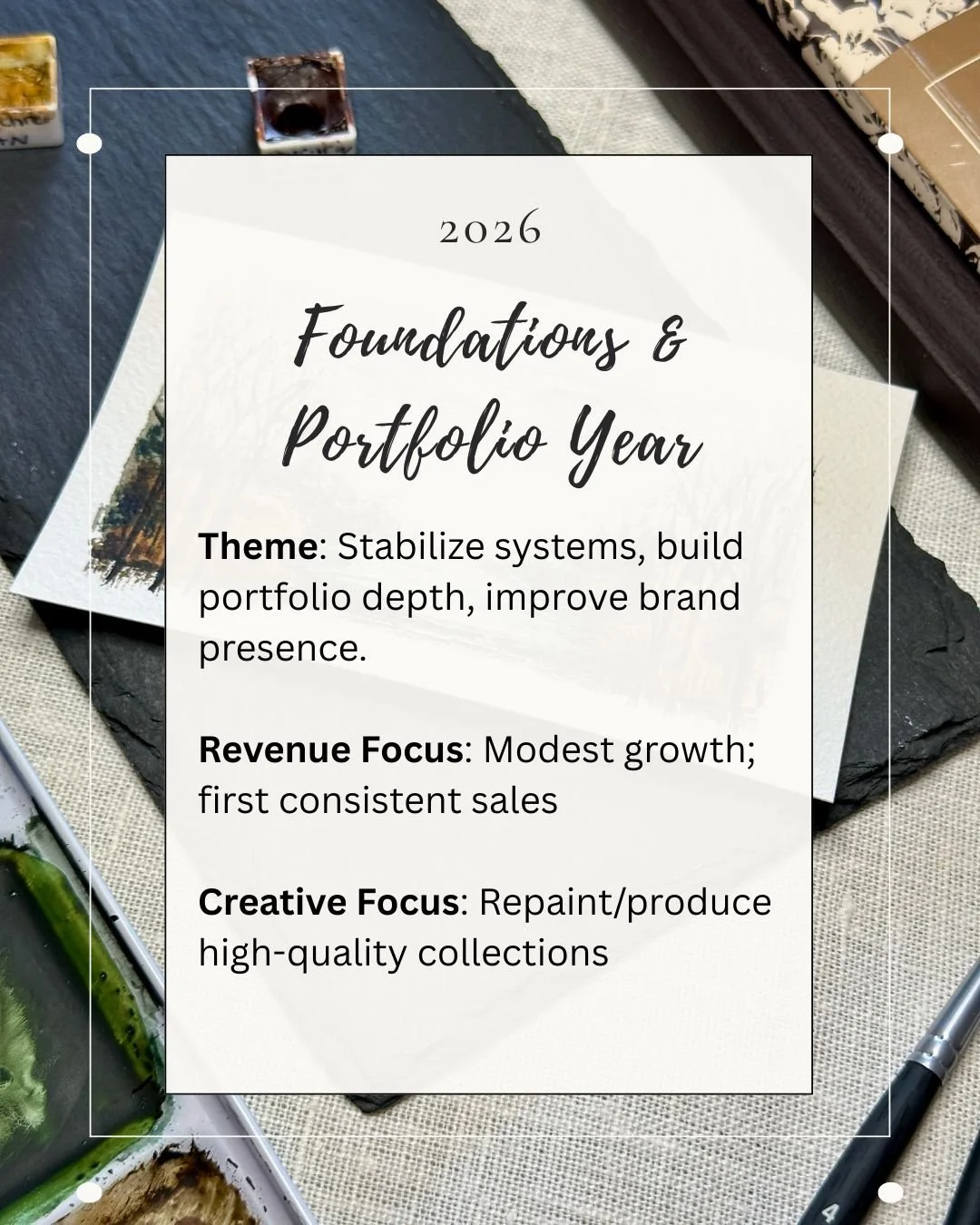
Pie-in-the-sky planning is a great way to start any annual planning process (see last’s week’s blog about creating my five year plan), but the devil is in the details. With my Five Year Plan fleshed out, I wanted ChatGPT to map out a plan for 2026. The theme for 2026 according to my five year plan is Foundations & Portfolio Year, and using that as the guiding light, Chat GPT broke down my year into quarters, each with its own unique theme based on the goal ideas I had already given it:
Website redesign in Q1
Retaking the Immersion Surface Design Course over Q1-Q2.
Designing 1-2 original painting collections for the year.
Designing enough patterns to start creating a licensing portfolio.
Additionally, it created a set of weekly and monthly benchmarks to try and hit to accomplish these overarching goals and my ongoing activities (blog, newsletter, social media, etc.) within the parameters of only 10-15 hours a week.
This is Part 4 of a four part series on annual planning for 2026. Read Part 1: 2025 Creative Business Reflections: Art, Goals, Burnout, and Looking Forward . Grab your free Annual Planning Toolkit.
How I Personalized My Plan
At a cursory glance, ChatGPT’s annual plan looked pretty good, but I wanted to make sure it was realistic. I wanted it to create action items for each of my big overarching goals for the year, account for all of the ongoing tasks I have and understand how I like to work, not just what I want to check off.
For example, the plan automatically assumed I would want to work on each of my tasks every week, especially those recurring ones: blogging, newsletter, creating content, etc. In reality, I like to batch my work. I don’t want to work on my blog every week. I would rather set aside a larger chunk of time each month for blogging. I also want to minimize my day-to-day time on Instagram. I would rather have one or two days dedicated to filming and batching content rather than having to do that every week.
Here are examples of other things that this plan was missing that also take up my time that I wanted ChatGPT to consider:
Monthly & weekly planning: Time to make sure I am on track and make adjustments based on what is or isn’t working.
Professional development time: Immersion is going to be a big task in Q1-Q2, but I am also part of a surface pattern design membership, Pattern+. It’s something that I probably want to work on at least once a week to review new resources, watch a coaching call, etc. I also have a monthly mastermind call with the women from my original 2024 Immersion study group.
Adjustments for getting ahead, particularly regarding content: A big challenge for me in 2025 was that I just got completely overwhelmed and burned out over the summer. My day job was too demanding, and I had no energy for anything creative after work. This new 2026 plan has an extremely light summer, but if I want to remain consistent, albeit at a less intense level, then I need to also get a little ahead in my content creation.
Admin tasks and working on the business: For me this includes:
Being more intentional about the financial side of things.
Allowing extra blank space to explore new ideas, dream, and evaluate how things are going.
As a final clarifying step, I asked ChatGPT to identify anything that I might be missing as a creative business owner. This was a useful exercise to identify all of those little tasks that can suck away my time. Again, ChatGPT also asked me some further clarifying questions to make sure that we were not missing anything. With this additional information, ChatGPT created a more detailed and realistic set of weekly & monthly baselines to try and hit, including suggestions for how to get ahead with content creation if time and inspiration allow each month.
With these final clarifications, ChatGPT put together my 2026 Strategic Plan divided into quarters. Here are some of the details if you are curious:
Time allotment per week: ~10–15 hours/week total capacity
Core focus for the year: Consistency, sustainable growth, portfolio building, brand visibility, and creating systems that carry you through summer.
Quarterly themes:
Q1: Foundations & Reset
Q2: Skill Expansion & Pre-Summer Buffer
Q3: Summer Light Mode + Post-Summer Reboot
Q4: Growth + Releases + Printshop Setup
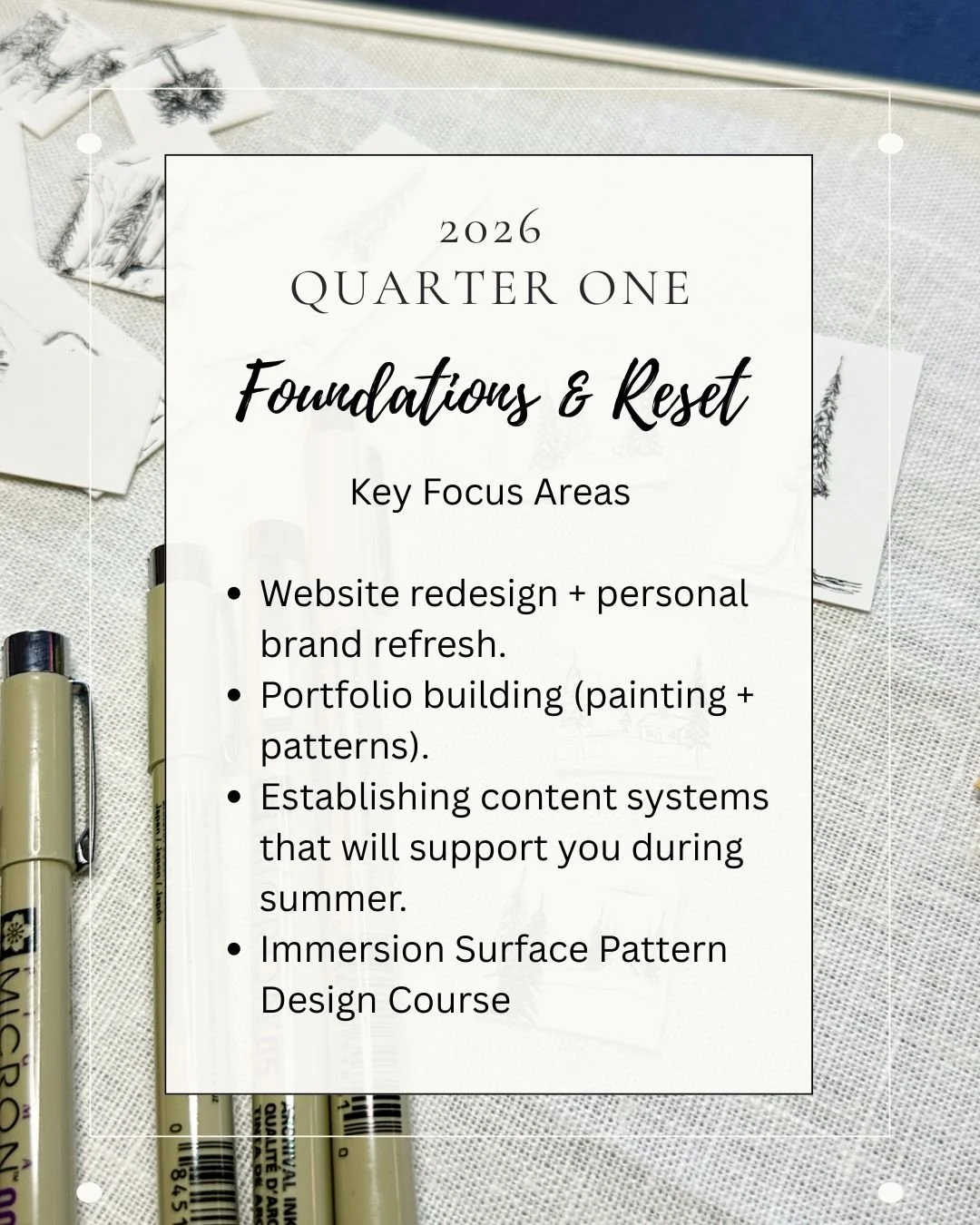
For each quarter, ChatGPT also created themes and specific milestones to try and reach. While this yearly plan made me about as queasy as the five year plan, I felt like I had a clear direction for how I should be working. It is probably more than I can actually accomplish in the next year, but what I like about this plan is how it is broken down into clear, actionable steps. Even if the Q1 milestones take me until the end of Q2 to accomplish, they still seem like realistic milestones that need to be reached if I have any hope of reaching those 2030 milestones. The most important part of this process for me is having a direction and a starting point. Plans and dreams change, but this plan definitely resonates with me, even if I am a bit nervous about the execution.
Creating a Detailed Plan for Quarter One
My final step was to create a Q1 plan with even more granular detail. Now here is where you have to avoid getting sidetracked with all that ChatGPT can do. At the end of creating my 2026 Quarterly Plan, ChatGPT was ready to map out my entire year with calendars, checklists, vision boards, etc. It also has the ability to work with any other tools that you might use, such as Google Calendar, Notion, etc, but since this is a side hustle and I know something is going to change, I decided to just stick to a plan for Q1. I know that I can come back to ChatGPT at the end of March, or sooner if necessary, to report on accomplishments and make any tweaks for Q2 based on the realities of Q1. I then asked ChatGPT to create a monthly checklist for Q1 divided by month that would include my recurring tasks such as content creation, milestones for achieving my primary goals, and then additional tasks if I had extra bandwidth during a month.
Organizing Information
Finally, I organized the information so that I could reference it as needed. ChatGPT will save your information, but I wanted my own copies to refer to as needed and my checklists available so I could check things off and make adjustments monthly and weekly.
In my Google Drive, I organized my files into a 2026 Goals Folder in the following way and copied and pasted the information I wanted from ChatGPT to use later:
Your 5 Year SMART Goal 2026-2030
2026 Strategic Plan Q1-Q4
Updated & Confirmed System
This was a detailed breakdown of the different aspects of my current business and how long I should be spending on them each week,
Q1 2026 Monthly Checklists
Final Thoughts
In terms of time, this process took me a few hours between the back-and-forth conversations and then prepping my files. The key was to make sure that ChatGPT had all of the information that it needed to make realistic plans for me. I needed to make sure:
That the time constraints made sense for my life.
That it understood the seasonality of my energy and when I could push and when I needed to rest.
That it understood how I like to work, which tasks I like to batch and where I needed flexibility to be creative.
The most important part of this whole process was continually asking ChatGPT to ask me further clarifying questions. ChatGPT would ask me things that I never even considered, which further improved my plan.
Overall, I think it was a worthwhile endeavor, and it was one of my first times really sitting down to create a five year plan ever. This was a helpful reality check for the amount of work and time it could take to achieve my dream goals. The real beauty of this process was seeing the year by year breakdown and the milestones associated with each year. The direction might change, but there is at least a clear starting point.
I also have a clear, if ambitious plan to follow for 2026, but the challenge with any plan is in the details and actually sticking to the plan and not getting distracted by things that do not move the needle forward.
And because why not, I asked ChatGPT to create a one page checklist if you want to follow this process on your own. If you do, please drop a comment to let me know how it went.
Want to see how this planning process is going to play out IRL? Follow me on Instagram for all the behind-the-scenes of my creative business.
You Might Also Like
Podcast Recommendation: Your Dream Has a Price Tag (The Jasmin Star Show)
This is Part 4 of a four part annual planning series for 2026:
Part 1: 2025 Creative Business Reflections: Art, Goals, Burnout, and Looking Forward
Part 2: Show Your Face: Why Visibility is my Word of the Year for 2026
Join my newsletter list and you’ll never miss a post. I can’t wait to see you in the Collector’s Club.