
How I Used ChatGTP to Create My Five Year Plan
Regardless of your opinion of AI, it is a tool that is here to stay, like the internal combustion engine or the internet. Like most technologies, it will depend on how you use it, not whether you use it.
Is it Too Late to Get Started
We’re halfway through January, and I feel like the world has divided into a few different camps.
You have the people who finished their annual planning back in December who are still feeling good, though they might be on their way to burnout by May and not even know it (hello me last year).
Then you have the people who have totally given up any hope of having a plan for the year and are just going to “see how it goes.”
And then you have people that are either in between those two extremes or they really want to have a plan, but they feel like it might be too late.
First, it doesn’t matter which camp you fall into, or if you have your own camp somewhere else that I did not mention. I don’t care if you find this blog when it publishes, next year or, five years from now (though five years from who knows where AI will be). Point being it is never too late to create a plan and I think that ChatGPT can be a great way to get started, if you know how to use it.
My Annual Planning Process
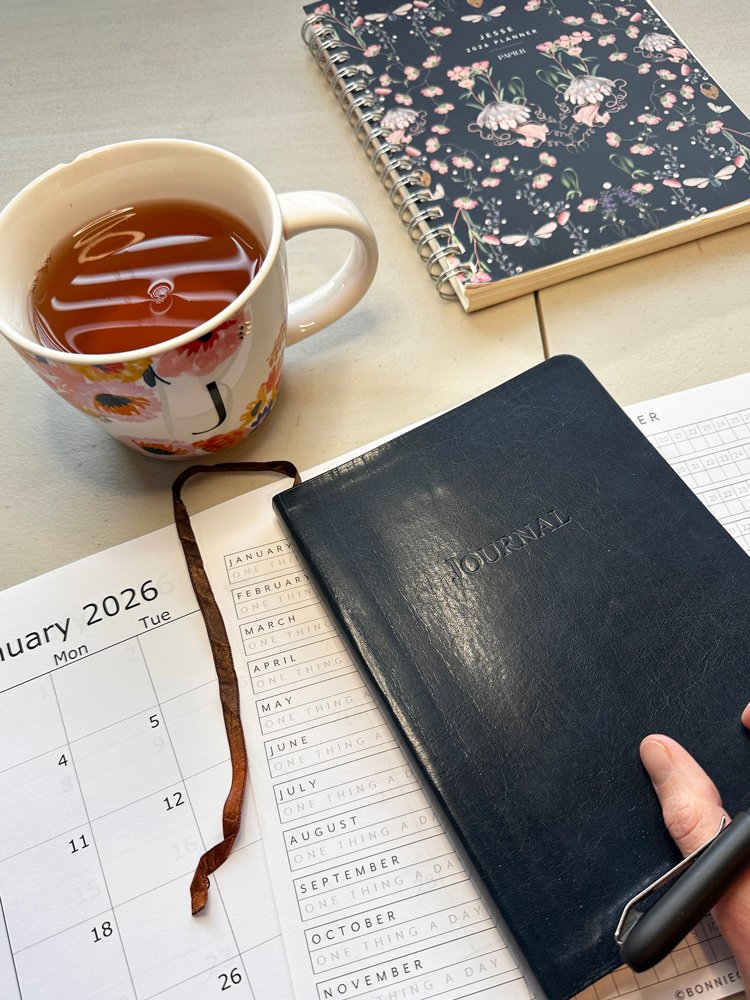
Each year my annual planning process changes a bit, but I generally start by reflecting on the year that just ended. Either in my journal or a separate piece of paper, I ask these questions:
What worked last year? What were the successes?
What sucked?
How do I want to feel in the upcoming year? This usually helps with picking a word later in the process.
Brain dump. Get all of those ideas out of your head.
Prioritize.
Choose your word of the year.
Check out my annual planning guide if you want help with this reflection process.
This year, I wanted to incorporate ChatGPT into the planning process. I have started to use ChatGPT in pretty basic ways in my creative business in the last few months:
Proof-reading blog posts.
Helping me brainstorm creating Pinterest pins and Instagram content from blog posts.
Helping me optimize my Etsy listings.
This is Part 3 of a four part series on annual planning for 2026. Read Part 1: 2025 Creative Business Reflections: Art, Goals, Burnout, and Looking Forward . Grab your free Annual Planning Toolkit.

My free annual planning guide.
Most of what I have learned about AI and has come from Dan Martell. Now, this is a guy who works with AI companies (so of course he is a bit biased) and entrepreneurs at big companies, but I started following his podcast after reading his book Buy Back Your Time, which I really enjoyed. So even though I may not be running a multi-million dollar company (yet 🙂), his podcast has a lot of useful information for how to use AI in ways that will save you time, including lots of free downloads to get started. I’m partial to the master prompt exercise, which has saved me loads of time at my day job.
Two things that Martell talks about often in his podcasts are:
If you want to grow, you need to have a clear vision of what that means and where you are trying to get to.
You need actionable steps of what you are doing daily that are going to move the needle forward toward your goals.
Now I have always had a pretty basic vision of where I want this creative endeavor to go. It would be really amazing to build a small side hustle into a big enough business that I can quit my day job and do it full time. It’s kind of specific, but it's also very nebulous. It begs the question: What is a big enough side hustle that would allow me to leave my day job?
Instead of diving into my 2026 planning immediately, I decided to use ChatGPT to first help me create my five-year vision that I would then use to work backwards to create an annual plan for 2026.
If you have never used an AI tool like ChatGPT before, here are some of the things that I have found to be the most useful in the process:
If you do not know how to use ChatGPT, you can ask it to teach you. Seriously.
Once you give it a bunch of information about the project you want it to help you with, you can have it ask you further clarifying questions to make sure that it knows exactly what you want.
It can put that information into whatever format works best for you: PDF, Excel spreadsheet, table, checklist, etc.
How I Created My Five Year Plan
Here is the exact prompt I used to get started (suggested by Martell):
I want you to help me define a five year SMART goal to start and then work backwards to help me create my goals for 2026. I will give you some information to get you started. Please ask me any additional questions to help clarify this SMART goal.
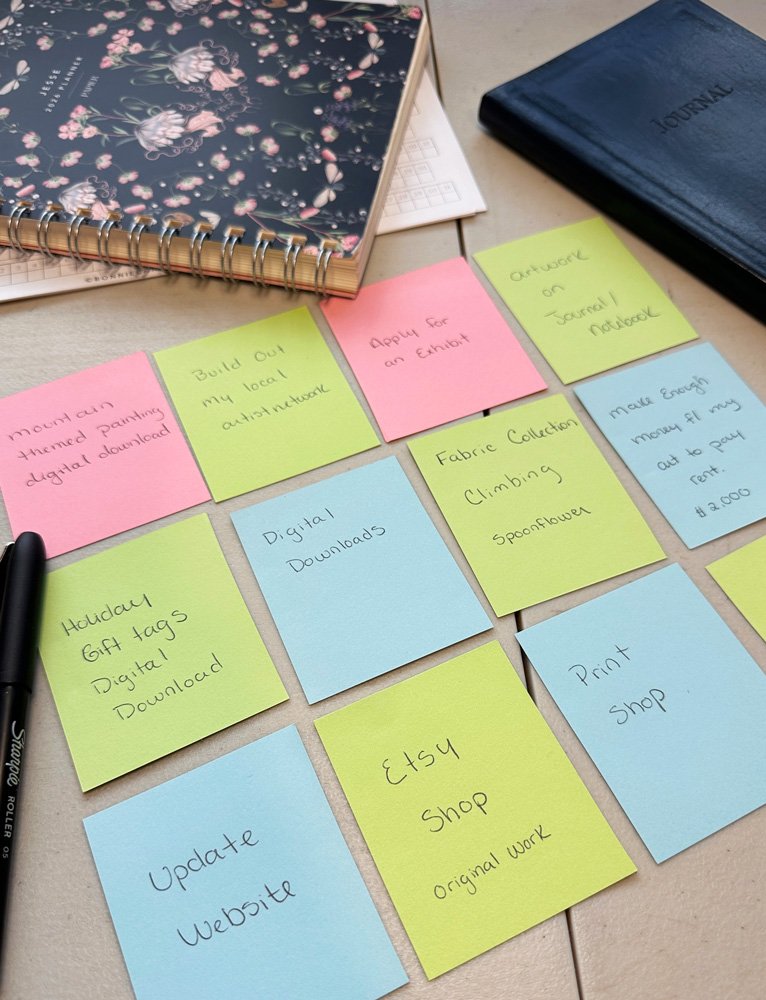
Brain dump of ideas.
Before I hit send for the first time, I also entered everything that I thought might be useful for ChatGPT to get started. I included the above chat and all of the following information in the same chat box before hitting enter:
I described what kind of artist I am in detail (watercolor artist & surface pattern designer).
I talked about the creative work I currently do (painting, designing patterns).
I listed the different things I am doing regularly to “build my brand” (blogging, newsletter, Instagram, Pinterest).
I listed my time constraints (I usually work 10-15 hours a week on my creative side hustle, because I also work full time at a museum).
I listed challenges. The most significant for me was serious burnout last summer during the summer camp season at my day job. I wanted ChatGPT to understand how my creative energy changes throughout the year so that it could create a plan that maximizes my time when I am excited and full of energy and then factors in time of rest when other aspects of my life, like summer camp or training for a bike event, take priority.
I listed all of the things that would be “pie in the sky” by the time we got to 2030. This is the fun part. It doesn’t matter if these things are completely accomplishable in five years. The point is that it gives me a North Star, a starting point, and the vision can and will change along the way. So I listed my dreams: things like replacing my income, the different streams of income I imagine I could have (prints, licensing contracts), my concerns about sustainability and burnout.
I also added the things I have already thought about for 2026 because while the overall vision is important, I wanted to see how it would handle those goals that already feel top of mind. For me, the biggest two were to redesign and update my website so that it is a better reflection of the artist I currently am and that I plan to retake the Surface Pattern Design Immersion course in 2026. This will take up most of my time March-May and leave little time for other activities.
Once I had brain-dumped fully, I reminded it to ask me any additional clarifying questions before hitting enter and watching ChatGPT do its thing.
Want to see how this planning process is going IRL? Follow me on Instagram for all the behind-the-scenes of my creative business.
The Magic of Clarifying Questions
In my opinion, the magic really comes in the back and forth process of the clarifying questions. This is where you get into the nitty gritty of what you actually mean. The questions that ChatGPT asked me related to:
Revenue Expectations: In my dream reality, how did I see my different revenue streams breaking down percentage wise.
Capacity: How did I want my goals structured?
Confidence & Stretch: Essentially, is this goal big enough? If you think you can easily hit the goal, make it harder.
Success Markers Beyond Revenue: Boy did this one make me think. If I put aside revenue, what are the other metrics/ accomplishments that are important to me? ChatGPT gave me a great list pulled from my stream of consciousness and told me to pick 2-3 only. He can be mean sometimes.
Timing: What is my life like in 2026, including things like vacations and goals outside of this creative business. In 2025, I was training for two cycling events, which took up big chunks of my time specifically during the summer months.
Threshold: What does going full time mean to me?
Risk Appetite: Three or four years from now what risks or bets on myself am I willing to take and ChatGPT gave me some options to consider.
Creative output: How did I want to structure my two main creative endeavors: painting and pattern design.
Values: Oof another one that hit me hard. I was given a list of them based on my brain dump and again told to pick 2-3 only.
No-go Ideas: Are there things that I am not interested in pursuing? For me, these are things like commissions and art markets. Those are not the kind of business models I want to pursue, so it was good to take them off the table.
After a little bit of back and forth clarifying what I wanted and also what I didn’t want, I was given a summary of my answers to confirm or refine further before it generated a 5-Year SMART Goal (2026-2030).
My 5-Year SMART Goal (2026-2030)
Now the details of my 5-Year Smart Goal do not matter, because my plan isn’t going to work for you, but here is how it was organized. Each year had its own title to summarize that year’s focus and then each year was further broken down into:
Theme
Revenue Focus
Creative Focus
Milestones
Now if you start to feel queasy at this point, then you are probably on the right track. I looked at that year by year breakdown and resisted the urge to tell ChatGPT that it was delusional and to not be so mean. I was intimidated, but in a good way, in a well if this is really what you want, this is what it is going to take kind of way. I reminded myself that this is the dream plan. That dream might change. I also had to take a moment and consider what my creative business could look like if I only accomplished 10% of what that plan outlined, and the changes would be significant.
In case you are curious, here are the themes for my five year plan:
2026: Foundation & Portfolio Year
2027: Expansion & Consistency
2028: Brand & Licensing
2029: Traction & Profit
2030: Year of Roots & Reach
I took all of the information and copied it into a Google Doc for easy reference. With my 5 Year SMART Goal in hand, it was now time to work backwards and turn to 2026 and my annual planning process.
Interested in when Part Two of this series drops? Join my newsletter list, the Collector’s Club, to have Part Two delivered straight to your inbox when it goes live.
You Might Also Like
Book: Buy Back Your Time by Dan Martell
Youtube Episode: How to Build AI Systems to ACTUALLY Achieve Your Goals (Dan Martell)
This is Part 3 of a four part annual planning series for 2026:
Part 1: 2025 Creative Business Reflections: Art, Goals, Burnout, and Looking Forward
Part 2: Show Your Face: Why Visibility is my Word of the Year for 2026
Part 4 From Vision to Action: How I Planned My 2026 Year Using ChatGPT
Join my newsletter list and you’ll never miss a post. I can’t wait to see you in the Collector’s Club.